Entity Framework Core Approaches
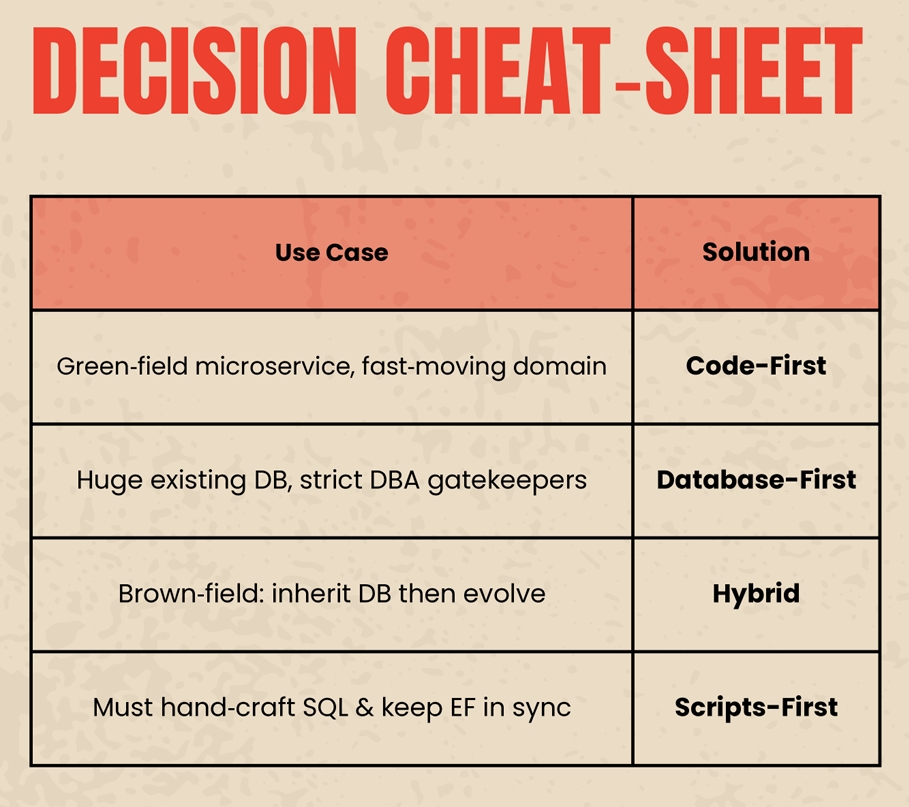
🔷 𝗖𝗼𝗱𝗲‑𝗙𝗶𝗿𝘀𝘁 (a.k.a. Model‑First in EF Core)
- Create POCO entities + a
DbContext.
- Run
dotnet ef migrations add ... to capture schema deltas.
- Apply with
dotnet ef database update or ship a generated SQL script.
🔹 Notable features
- Incremental migrations keep schema and code in sync through Git history.
- Fluent API & attributes give full control over keys, indexes, seed data, etc.
- Works even when the target database doesn't exist yet.
🔹 Pros and Cons
✅ Pros
- Refactoring‑friendly - your IDE/lightning‑fast tests push the domain model first - DB follows.
- Versionable migrations - review SQL in PRs; promote through CI/CD.
- Easier DDD alignment - entities stay close to business language.
❌ Cons
- Requires migration discipline - bad merges = broken prod schema.
- May clash with strict DBA workflows - DBAs often want hand‑written scripts and zero implicit changes.
- Initial learning curve - Developers must grok migrations CLI + conventions.
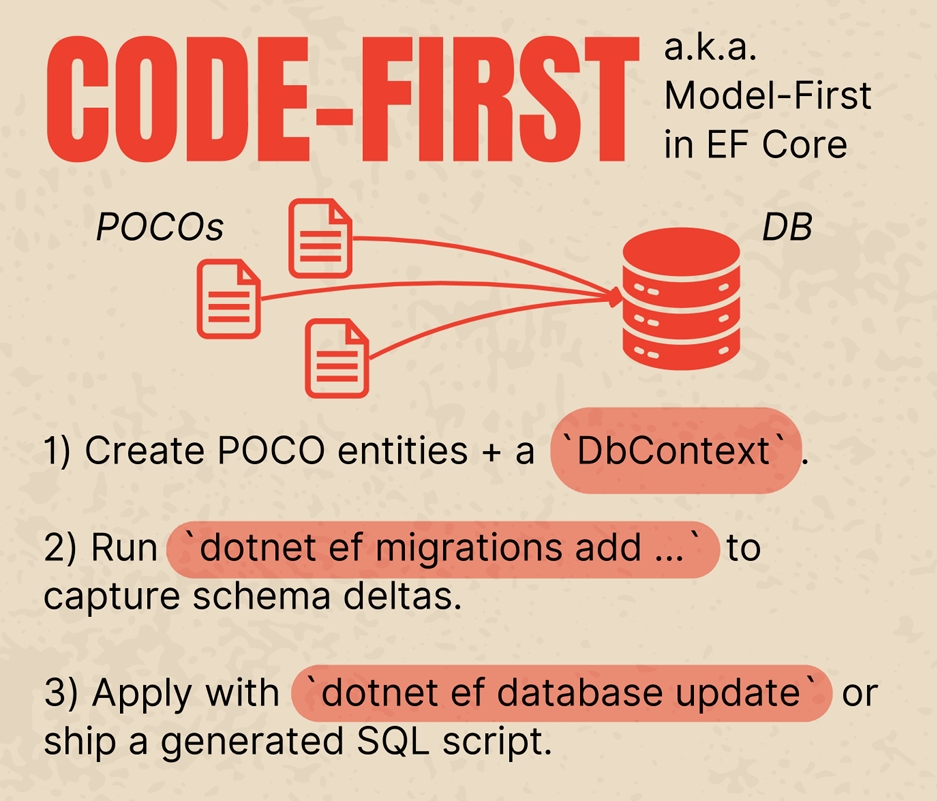
🔶 𝗗𝗮𝘁𝗮𝗯𝗮𝘀𝗲‑𝗙𝗶𝗿𝘀𝘁 (Reverse Engineering)
- Point EF Core at an existing DB (or .dacpac).
- Run
dotnet ef dbcontext scaffold or use EF Core Power Tools UI.
- EF Core generates POCOs,
DbContext, and fluent mappings that mirror the schema.
🔸 Notable features
- Scaffolding filters let you pick tables, views, SPs.
- Supports SQL Server, PostgreSQL, MySQL, Oracle, SQLite and more.
🔸 Pros and Cons
✅ Pros
- Fast onboarding to legacy DBs - zero manual modelling; instant CRUD.
- Keeps DBA‑owned schema authoritative - app code reflects what's already deployed.
- Works with vendor DBs you can't touch - read‑only or limited‑write scenarios.
❌ Cons
- Re‑scaffold churn - every schema change forces regeneration or manual edits (risk of losing custom tweaks).
- Limited modelling constructs - inheritance, table splitting, owned types may not be inferred cleanly.
- Less DDD alignment - DB naming/style leaks into domain layer.
⬜ Other & Hybrid Approaches
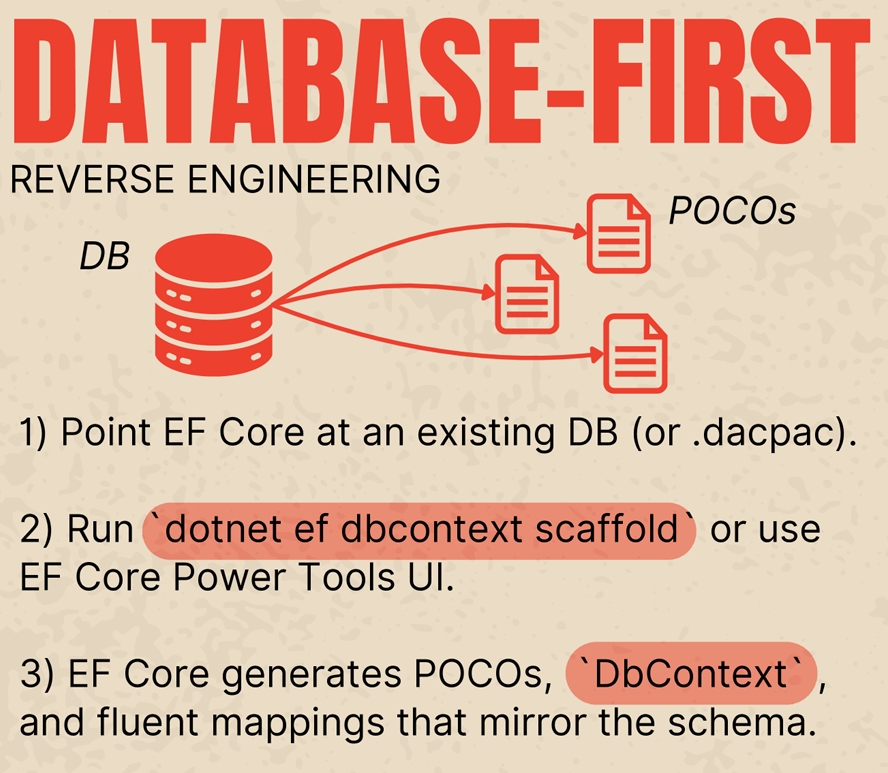
▫️ 𝗛𝘆𝗯𝗿𝗶𝗱 / "Migrations‑after‑scaffold" - scaffold once, then switch to Code‑First migrations for future changes. Useful when modernising a legacy DB.
▫️ Model‑First (EF Designer) - classic EF 6 EDMX; diagram first, generate both DB & code. Rare in EF Core; EF Core Power Tools offers visual diagrams only.
▫️ SQL‑𝗦𝗰𝗿𝗶𝗽𝘁𝘀‑𝗙𝗶𝗿𝘀𝘁 (DDL Projects) - teams that keep schema in a Database Project (.sqlproj, .dacpac) and let EF map read‑only.
▫️ Data‑First / No‑EF - query builders or Dapper for hot paths, EF Core for the rest. Combine micro‑ORM and full ORM based on perf needs.
ℹ️ Decision Cheat‑Sheet
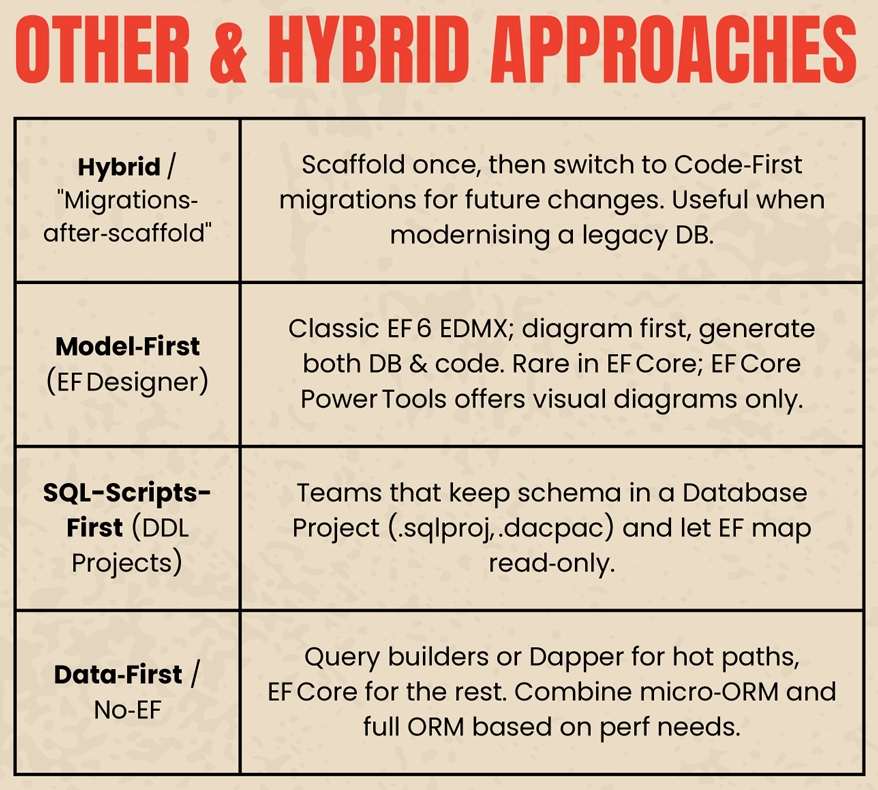
- Green‑field microservice, fast‑moving domain - 𝗖𝗼𝗱𝗲‑𝗙𝗶𝗿𝘀𝘁
- Huge existing DB, strict DBA gatekeepers - 𝗗𝗮𝘁𝗮𝗯𝗮𝘀𝗲‑𝗙𝗶𝗿𝘀𝘁
- Brown‑field: inherit DB then evolve - 𝗛𝘆𝗯𝗿𝗶𝗱
- Must hand‑craft SQL & keep EF in sync - 𝗦𝗰𝗿𝗶𝗽𝘁𝘀‑𝗙𝗶𝗿𝘀𝘁